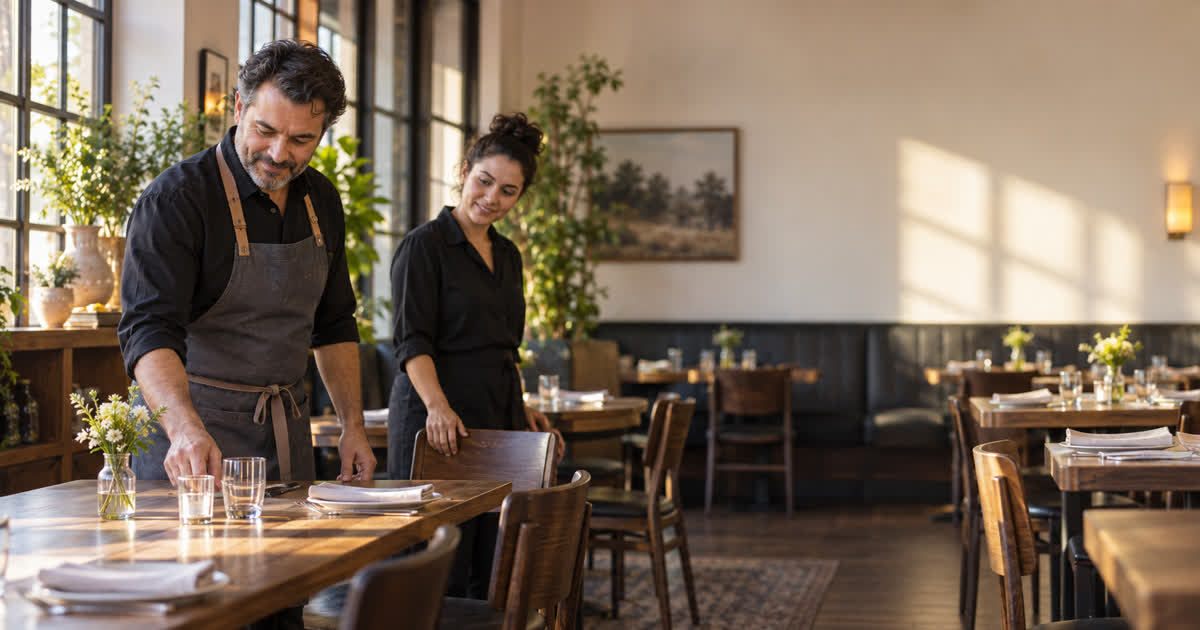
A clearly hypothetical restaurant moment: an owner has approved a new campaign idea, but the handoff is still a loose mix of a photo, a date range, a landing page, and a note that says “run this.” The ad account is not the place to discover what the offer means, who may see it, or when the team can handle the response.
A restaurant campaign is ready for automation only after a person turns the idea into a verified brief with a real destination, clear limits, and named approval points.
Short answer: An AI agent for performance marketing in a restaurant can organize an owner-approved campaign brief, check that the ad and destination describe the same offer, flag missing dates or assets, prepare copy variants, and route the package for human review. It should not invent menu items, prices, availability, audiences, budgets, food or health claims, alcohol promotions, or expected results. The owner or authorized marketing lead still approves the offer, spend, targeting, creative, destination, launch, and any later change. If a required fact is missing or the destination does not match, the workflow should stop instead of guessing.
Why “run this” is not a usable campaign instruction
Paid advertising compresses several business decisions into a small public space. The headline, image, destination, timing, audience, and offer create one combined message. A mismatch in any one of them can change what a person reasonably believes.
The Federal Trade Commission says advertising must be truthful and non-deceptive, advertisers need evidence for their claims, and the full context matters, including express claims, implied claims, images, and material omissions.[1] Google Ads also bars ads or destinations that mislead users, promote unavailable offers, or send people to a destination that is not relevant to the promotion.[2]
That makes the campaign brief more than a writing prompt. It is the record of what the restaurant has actually authorized.
What belongs in a restaurant campaign brief
A useful brief can be short. It still needs enough structure to prevent the ad account from becoming a guessing machine.
- Business and location: Identify the exact restaurant or unit the campaign represents.
- Approved offer: Record the owner-approved service, event, or promotion without inventing menu details, prices, availability, or terms.
- Audience boundary: State the permitted geography and any restrictions. Do not infer sensitive traits or build an audience from private guest data.
- Dates and capacity: Record when the message is valid and who confirms that the business can fulfill it.
- Destination: Verify that the landing page contains the same material offer and current details.
- Assets and rights: Confirm the image, copy, marks, and permissions for the exact channels.
- Claim support: Identify the source for any measurable, comparative, dietary, environmental, health, popularity, or quality claim.
- Human owners: Name who approves the offer, budget, audience, creative, launch, and exception handling.
- Stop conditions: Hold the campaign when facts conflict, approval is missing, the destination fails, or the platform returns an unclear result.
The brief does not need customer names, reservation details, payment information, dietary requests, or private guest records.
Where KIGWI’s Performance Marketing AI Agent can fit
KIGWI USA lists a Performance Marketing Specialist among its marketing and growth agents.[3] For a restaurant or catering business, the defensible role is administrative support around an owner-approved campaign process.
Under a verified workflow, the agent can:
- organize approved campaign inputs into one reviewable brief
- compare the proposed ad with the approved destination
- flag missing dates, asset rights, audience boundaries, or owner decisions
- prepare copy and format variants without changing the approved claim set
- keep draft, review, approved, launched, and verified states separate
- route exceptions to the responsible person
- prepare a post-launch review packet from observed platform data
It should not:
- create menu items, prices, promotions, availability, or service terms
- make food-safety, allergen, nutrition, dietary, alcohol, labor, payment, accessibility, or permit decisions
- choose or expand an audience from guest, loyalty, order, or sensitive data
- set or change budget, bidding, geography, or campaign objectives without approval
- publish an ad, retry a failed launch, or change a live campaign on its own
- declare a campaign successful, causal, profitable, or typical
The point is not to remove the owner from advertising. It is to give the owner a clean object to approve.
Match the ad to the destination before launch
A restaurant ad can be accurate by itself and still mislead when the destination tells a different story. Before launch, compare the two side by side.
Check:
- business and location identity
- offer name and material terms
- dates and availability
- image and copy meaning
- action the visitor is expected to take
- price or fee language when any appears
- disclosures and limitations
- privacy notice and data fields on the destination
- mobile and accessible rendering
If the ad promotes something the destination does not clearly support, stop. Do not assume the visitor will call, search another page, or interpret the gap generously.
Use refusal rules for restaurant-specific risk
Some campaign inputs should never flow through as routine copy. Route the item to a person when it includes:
- food-safety, allergen, nutrition, dietary, ingredient, or health language
- alcohol products, service, delivery, discounts, audience restrictions, or age questions
- wages, tips, staffing, scheduling, or employment claims
- payment, gift-card, refund, or card-data handling
- physical-accessibility, permit, occupancy, or code claims
- customer reviews, testimonials, identifiable people, or client-provided proof
- a real logo, delivery platform, reservation system, or named integration
- a complaint, injury, illness report, legal demand, or regulator contact
Those are not copy-polish problems. They change the owner, evidence, and review path.
A practical first test
Start with a fictional restaurant campaign and synthetic records. Use a made-up offer with no food, alcohol, health, price, or customer claim. Keep the destination disconnected from live forms and ad accounts.
Test at least these cases:
- complete approved brief
- missing date
- mismatched destination
- unapproved image
- unsupported claim
- private guest data in the input
- budget change after approval
- duplicate launch request
- platform outcome unknown
The workflow passes only when ordinary records move to review and every risky or incomplete record stops with a clear reason. Connecting a live account is a separate technical and approval decision.
Frequently asked questions
Can an AI agent choose a restaurant’s ad budget?
Not under this workflow. The agent can organize observed spend and prepare options for review, but the owner or authorized marketing lead approves the budget, bidding approach, geography, objective, and any change. A performance metric does not authorize a spending decision, and an unclear platform result should stop rather than trigger an automatic retry.
Can the agent create a promotion from a menu or calendar?
It can prepare copy only from owner-approved facts. It should not invent a menu item, price, discount, date, availability, ingredient, service term, or expected result. If the source record and destination disagree, the campaign stays on hold until the authorized restaurant owner resolves the difference.
Should the campaign use reservation or loyalty data for targeting?
Not by default. Reservation, order, loyalty, dietary, location, contact, and delivery information can be personal or sensitive. Any audience use needs a separately approved privacy design, minimum necessary data, notices, vendor and retention review, and current authority. A campaign brief should not contain private guest records.
Can the agent approve food, allergen, alcohol, or nutrition claims?
No. Those decisions stay with the restaurant’s authorized people and qualified reviewers. The workflow should route the language out of the ordinary campaign lane rather than rewrite it into a claim. A disclaimer does not turn a regulated or safety-sensitive decision into routine marketing administration.
What should happen if an ad platform reports an unclear launch result?
Stop and inspect the native account. Do not publish again, duplicate the campaign, change the destination, or switch tools just to make the status look complete. Record the object, account, time, approved brief, and observed state, then obtain authority for any retry or correction.
Build the brief before the campaign
A restaurant does not need more advertising motion. It needs a reliable handoff from an approved idea to a reviewable campaign. Keep the brief narrow, the destination truthful, the stop conditions visible, and the owner in control of every consequential decision.
Ask KIGWI USA about a bounded Performance Marketing workflow for your restaurant or catering business: https://kigwi.com/contact/
Sources
[1] https://www.ftc.gov/business-guidance/resources/advertising-faqs-guide-small-business [2] https://support.google.com/adspolicy/answer/6020955?hl=en [3] https://kigwi.com/solutions/